Essential Laser System Components for Optimal Performance
High quality replacement laser system components are a must for any laser system operator. Even the...
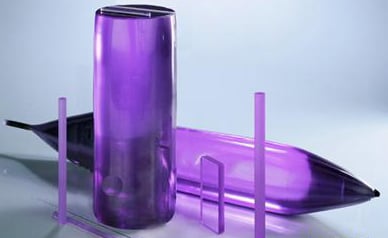
Yes. Legacy, obsolete, and discontinued laser systems can be kept in production, and in most cases the parts and service are still available from a company that never stopped making them. TJS manufactures direct replacement components for legacy industrial lasers, stocks the consumables and optics those systems consume, and dispatches field service engineers to keep them running. Since 1980 that has been the work.
Quick Answer
Yes. Direct replacement components for legacy and obsolete laser systems are still manufactured and stocked, including flashlamps, mirrors, lenses, pump assemblies, flow tubes, and dust windows. A discontinued platform is not the same thing as an unsupportable one.
Here is the situation most plant engineers describe when they call. The laser still marks good parts. The workstation, fixtures, automation, and part programs all still work. What broke was the support behind it. The OEM sent an end of support letter, got acquired, or simply stopped answering questions about a platform it stopped selling fifteen years ago. Meanwhile the flashlamp is at the end of its shot count and the machine is scheduled to run Monday.
This page covers what parts are still available, which legacy brands can be serviced, what fails first on an aging system, how fast emergency service can reach you, and how to tell when a drop-in retrofit finally beats one more repair.
"Obsolete" is a decision the original manufacturer made about its product line, not a verdict on the condition of your machine. Laser platforms get retired because the OEM changed technology, sold the division, or found the aftermarket too small to justify a parts inventory. None of that changes the fact that the granite base is flat, the enclosure is intact, the automation still indexes, and the part programs still run.
What does age is a short list of consumables and optics in the beam path. Those are the components a third-party manufacturer can build to the original specification, and often to a tighter one, because coating technology and optical substrates have improved since the system shipped.
The economics usually favor keeping the machine. A set of optics and a flashlamp is a fraction of the cost of a new system, and it carries no requalification, no new fixture design, no operator retraining, and no PPAP conversation with your customer.
TJS manufactures direct replacement components for all types of industrial, medical, aesthetic, and scientific lasers, and has been doing so since 1980. You can find a complete list of the replacement components we carry here.
Legacy systems from General Scanning, GSI, Lumonics, JK Lasers, and Spectron are supported, along with Control Laser Corporation, Excel/Quantronix, Baublys Laser, Rofin-Sinar, Rofin-Baasel, A-B Lasers, and Lee Laser, plus Lasag, Fotona, U.S. Laser Corporation, and Electrox. That is a partial list. If your nameplate is not on it, ask.
Some of those names disappeared into acquisitions years ago. Others still exist but walked away from the platform sitting on your floor. The result for you is the same: no parts, no phone number, no one who remembers how the resonator was aligned at the factory.
Field knowledge is the part that does not transfer through an acquisition. Knowing that a particular pump chamber runs hot, that a certain power supply drifts before it fails, that one model's controls board has a known solder joint issue, that experience lives with the people who have had their hands inside those machines for decades. It does not live in a data sheet.
That is why owners of these systems tend to come to a service company rather than back to the OEM. TJS has worked on these platforms continuously since 1980, and the technical staff carries roughly 140 years of combined laser experience across them.
On a flashlamp-pumped or older diode-pumped laser, the first failures are almost always consumables and optics in the beam path: the flashlamp itself, the flow tube, the dust window, the resonator mirrors, and the focusing optics. Pump assemblies and power supplies follow.
The mechanism is predictable. Flashlamp output degrades with accumulated shot count long before the lamp fails outright, so mark quality drifts while the operator compensates by turning up current, which shortens lamp life further. Flow tubes solarize and lose transmission, cutting pump efficiency. A contaminated dust window absorbs energy instead of passing it, heats up, and takes out the optic behind it. Coolant chemistry does quiet damage: once deionized water resistivity falls out of spec, you get plating, corrosion, and scale in the pump chamber.
Read together, those failure modes explain a symptom every operator recognizes. The machine does not stop. It gets weaker. Cycle times creep up, contrast falls off, and someone increases power to hold the mark until something lets go in the middle of a production run.
Components and consumables TJS stocks for these systems include flashlamps, mirrors, lenses, pumps, flow tubes, and dust windows. Ordering the wear items on an interval, rather than after a failure, is the single cheapest change most owners of older systems can make.
TJS provides 24/48 emergency service on legacy and older laser systems, with factory-trained field service engineers available on-site and repair capability in-house. Most calls begin with phone triage, because a meaningful share of failures can be diagnosed and sometimes corrected without a truck roll.
Downtime on a marking or welding cell is rarely just the cell. Marking is often the last operation before shipment, which means a down laser holds finished goods, not raw material. That is why response time matters more on this equipment than its purchase price would suggest.
Two paths exist once a problem is identified. An engineer comes to the plant with parts and works on the system in place, or the laser or subassembly ships in for bench repair where test equipment and spares are already sitting. Which one is faster depends on the failure, the platform, and whether the fixture can be freed up.
Emergency service, on-site field service, in-house repair, and technical phone support are all available for legacy systems.
Yes. On aging systems, scheduled preventive maintenance is what separates planned downtime from unplanned downtime, because most of the failure modes on these lasers announce themselves through measurable drift before they become breakdowns.
A useful PM scope on a legacy system covers optics inspection and cleaning, coolant and deionized water service with a resistivity check, power output verification against the original specification rather than against last month's setting, beam alignment, chiller service, and flashlamp replacement based on shot count instead of failure. Recording output power at every visit turns the laser from a mystery into a trend line.
Interval matters more than any single task. A system running two shifts of production marking needs a different schedule than one that runs an hour a day in a job shop, so duty cycle should drive the calendar rather than the reverse.
TJS offers a preventive maintenance program for legacy, obsolete, and older laser systems, structured around how the machine is used.
TJS field service engineers are factory-trained with a minimum of 20 years of experience each, supported by a technical staff carrying roughly 140 years of combined laser experience. They provide full system support covering components, repairs, alignment, and technical assistance.
Experience is the whole argument on legacy equipment. Documentation for a system built in the 1990s is often incomplete, sometimes wrong, and occasionally missing entirely. What replaces it is pattern recognition: an engineer who has seen the same power supply fail the same way on the same platform in four other plants.
TJS is a technical laser company supporting industrial, medical, aesthetic and IPL, and scientific lasers. Same engineers, same benches, whether the system is a marking cell from 1998 or a fiber laser shipped last quarter.
Retrofit makes sense when the workstation and automation are still sound but the laser has become the weak link, meaning parts spend and repeat downtime are climbing while mark quality keeps slipping. At that point the Endeavor RETRO replaces the laser and controls and keeps everything else you already own.
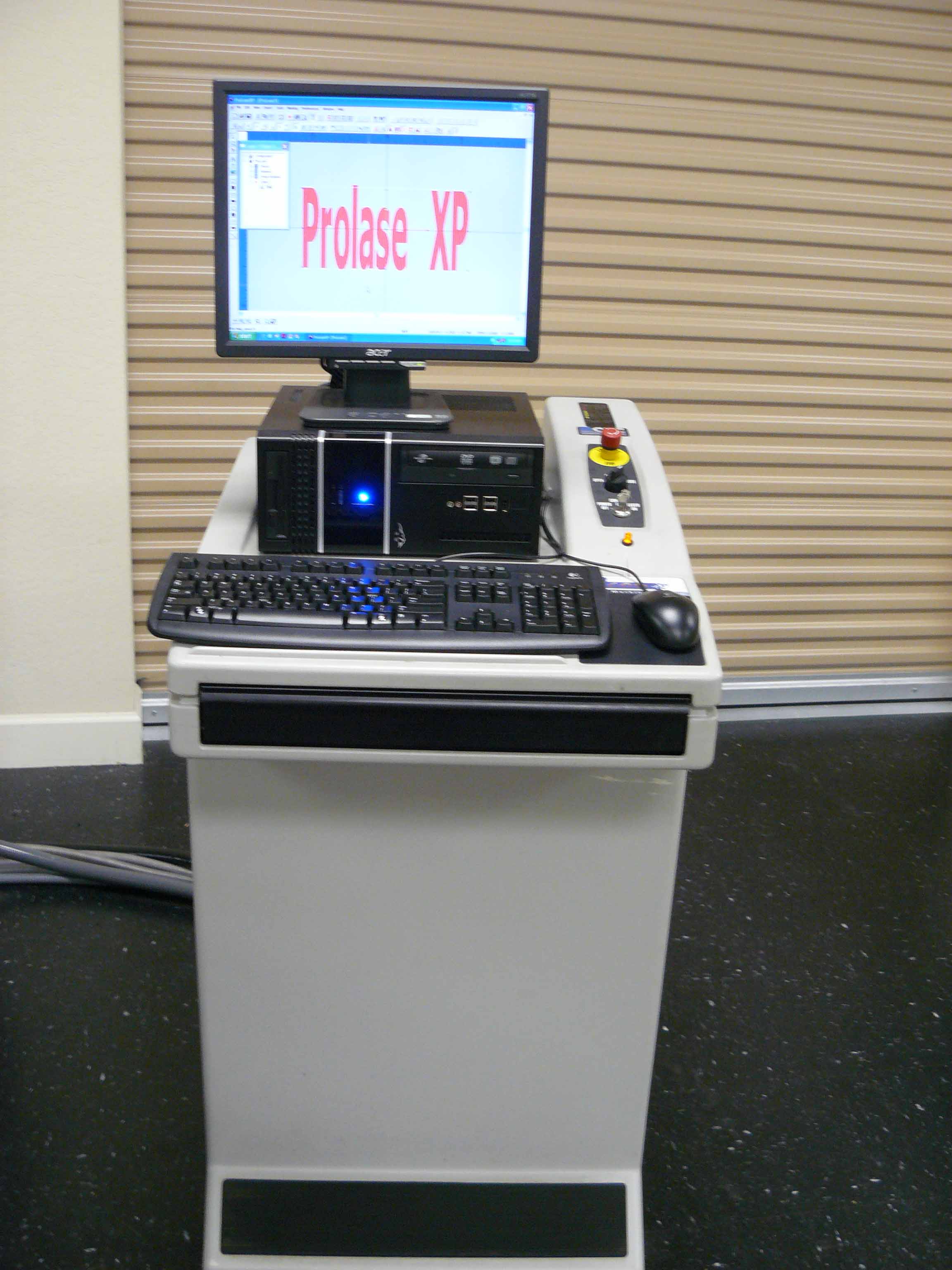
The RETRO is a drop-in fiber replacement for existing flashlamp, diode-pumped, CO2, and other legacy laser systems. It reuses the existing workstation along with most automation, conveyors, and part-handling infrastructure, because TJS replaces the laser and controls rather than the cell. Systems are air-cooled and run on 120VAC, which removes the 230VAC three-phase service and the chiller from the equation, and they are available from 20W through 200W with the PROLASE 10 operating software. Every RETRO is designed, manufactured, and assembled in the United States and carries a three-year limited warranty on the fiber laser.
Fiber changes the maintenance math as well as the performance. There is no flashlamp to replace on a shot count, no flow tube to solarize, no deionized water loop to maintain. TJS designed the RETRO out of 40-plus years of repairing and retrofitting these exact systems, which is also why the honest recommendation is often the other one: if your machine needs a flashlamp and a set of optics, buy the flashlamp and the optics.
Where the decision is genuinely close, the numbers that decide it are annual parts spend, hours of unplanned downtime, and whether the marks still meet the customer's requirement at rated power. If a retrofit is worth pricing, the Endeavor RETRO and the custom workstation options are the place to start.
Send the nameplate. Model, serial number, and manufacturer are usually enough to confirm what parts are stocked, what service is available, and whether a retrofit is worth pricing. If the system is down right now, call rather than email so triage can start immediately.
Contact us to learn more about our laser services, repair and replacement options, and maintenance programs.
TJS, Inc. is a technical laser company supporting industrial, medical, aesthetic and IPL, and scientific lasers. We manufacture direct replacement components for all types of lasers and have serviced these systems since 1980.
Join the Conversation! Leave a comment below.