Who Will Repair My Industrial Laser When the OEM Won't?
If your laser builder has stopped answering the phone, discontinued your parts, or quoted you a...
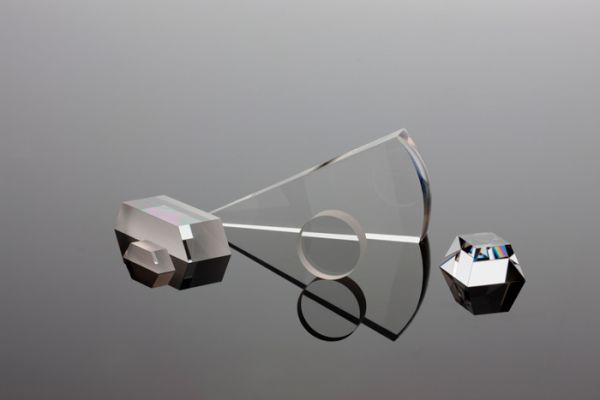
Lumonics and JK Laser Nd:YAG systems built in the 1980s and 1990s are still marking, welding, and drilling parts today, in everything from job shops to medical device production. The companies behind them merged, sold, and moved on. Support did not disappear with them. TJS stocks the consumables these systems burn through, flashlamps, lenses, mirrors, and pumps, along with harder-to-find spares like gold cavities, Nd:YAG rods, and PC boards, typically at lower than OEM pricing. When a part swap won't fix the problem, we repair these systems in-house or on-site.
This post covers which parts are still available, the failure modes that actually take JK systems down, your repair and upgrade options, and how to tell when replacement makes more financial sense than another rebuild.
Yes. OEM support for legacy Lumonics and JK Laser Nd:YAG systems has largely wound down, but independent laser service companies still stock replacement parts and repair these systems. TJS has supported Lumonics/JK lasers for decades and keeps common consumables and spares in inventory.
The brand history explains the support gap. JK Lasers and Lumonics both ended up under the GSI umbrella through a series of mergers, and the lamp-pumped Nd:YAG product lines were eventually discontinued as the industry shifted to fiber. That left thousands of working systems without a factory to call.
Here's the part owners sometimes miss: an orphaned laser is not an obsolete laser. Lamp-pumped Nd:YAG architecture is well understood, the components are serviceable by design, and a properly maintained JK system can keep producing quality marks and welds for years. The question is never whether the system can be supported. It's who supports it, and whether they know these specific systems well enough to diagnose them correctly.
TJS has been servicing and repairing laser systems since 1980, including Lumonics and JK models across industrial and medical installations, so these systems are familiar territory rather than a research project.
Nearly every consumable and spare a JK or Lumonics system needs is still available: OEM flashlamps, Nd:YAG rods, gold cavities, flow tubes, mirrors, Q-switches, filters, and control boards. TJS stocks these replacement components, typically at lower than OEM pricing.
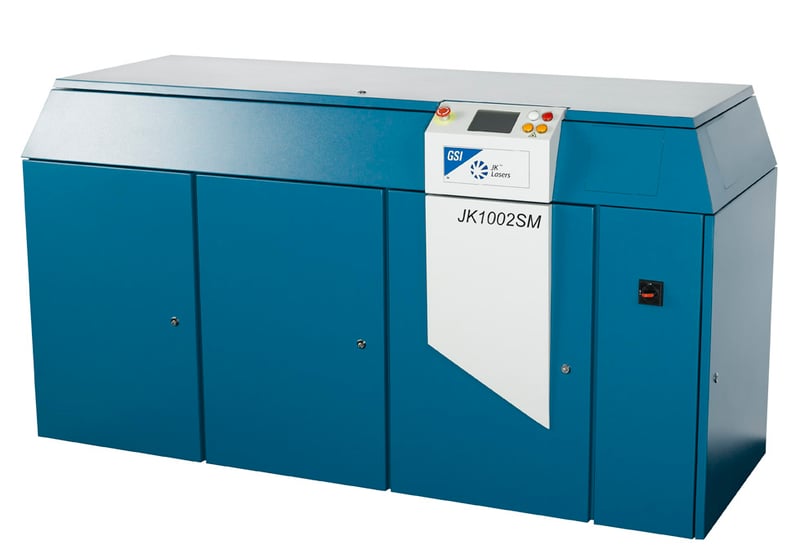
The distinction between consumables and spares matters for planning. Consumables like flashlamps, lenses, mirrors, and pump components wear out on a schedule you can roughly predict from your duty cycle. Spares like capacitors, diodes, fittings, U.V. lamps, and control boards fail less often but stop production cold when they do. Smart JK owners keep the first category on the shelf and know where to get the second category fast.
TJS Spare Parts/Consumables service includes:
Most JK laser problems trace back to four components: the flashlamp, the gold-plated pump cavity, the Nd:YAG rod, and the Q-switch. Falling output power, hard starting, and inconsistent marks almost always point to one of these before anything else.
Flashlamps degrade gradually rather than failing outright. Electrode material sputters onto the quartz envelope over thousands of hours of operation, darkening the lamp and cutting the light reaching the rod. Operators notice output power creeping down and triggering getting less reliable. Running a worn lamp past that point stresses the power supply, which turns a routine consumable swap into a much more expensive repair.
The gold cavity fails quietly. Its job is to reflect lamp light into the rod, and any loss of reflectivity, whether from coolant deposits, corrosion, or plating wear, shows up as lost output. The common response is to turn up lamp energy to compensate. That works for a while, and it accelerates lamp wear and heat load the entire time. If you're replacing lamps more often than you used to at the same power settings, look at the cavity.
Rods and Q-switches round out the list. A damaged rod coating or a fractured rod produces beam quality problems no amount of lamp energy fixes. A failing Q-switch shows up as inconsistent pulse energy, first-pulse problems, or laser output leaking through when it should be held off.
One more pattern worth naming: water quality kills more cavities and rods than age does. The DI filter and particle filter are the cheapest parts on the whole system, and neglecting them contaminates the most expensive ones. If your maintenance budget only covers one habit, make it filter changes.
This is the practical difference between buying from a laser service company and buying from a parts catalog. Describe the symptoms to TJS and our technicians can usually tell you which component is the real problem, so you order the right part once instead of guessing twice.
Yes. TJS offers a full range of service and repair options for Lumonics/JK systems, with both in-house and on-site repair and a 24/48 hour emergency service call response to minimize downtime.
In-house repair suits laser heads, power supplies, and assemblies that can ship. On-site service handles alignment, installation, and problems that only show up in your building, on your power, with your water. Between the two, most JK issues get resolved without the system leaving production for long.
Service also extends past fixing what broke. TJS offers laser system upgrades using Windows 10/Prolase software and hardware upgrades for most Nd:YAG, fiber, and CO2 lasers. For a lot of JK systems, the mechanical and optical hardware is still sound while the original controls and software have become the weak link. A controls upgrade can add years of useful life for a fraction of replacement cost.
Replace when repair costs start approaching a significant fraction of a replacement laser, when downtime keeps recurring after repairs, or when the failing components are structural, like the power supply or control architecture, rather than consumable. A drop-in fiber replacement lets you keep your existing workstation and automation while retiring the aging laser itself.
Run the math on operating costs too, not just the repair invoice. A lamp-pumped JK system consumes flashlamps, DI water, filters, and chiller capacity, and typically runs on 230VAC 3-phase power. A modern MOPA fiber laser is air-cooled, runs on 120VAC, and has no consumables to stock. When a JK system needs a major rebuild, that ongoing cost difference belongs in the repair-or-replace decision alongside the quote.
If you do need a replacement laser, the Endeavor RETRO is designed as a replacement system for any existing flash lamp, diode pump, CO2, or other laser systems. TJS replaces the laser and controls and you keep the workstation, fixturing, and most automation you already own. Since introducing the Endeavor line in 2014, TJS reports zero field failures across the installed base, and backs the design with a 3-year warranty on the fiber laser. In one tool and die application, TJS customers report jobs that took over 3 hours on a lamp-pumped system finishing in under 3 minutes on an Endeavor fiber laser.
Contact TJS with your system model and the symptoms you're seeing. Our trained and experienced staff match your laser system requirements against a large stock of parts so you get the right part the first time, instead of paying freight on the wrong one.
TJS, Inc. (TJ Sales Associates, Inc.) reports being the largest consumer of flashlamps in North America, supporting the industrial, medical, aesthetic, and semiconductor laser markets globally with laser services, components, refurbishing, and repairs for all types of laser systems.
Contact TJS and let us help you locate the right laser components for your Lumonics/JK Laser system.

Join the Conversation! Leave a comment below.